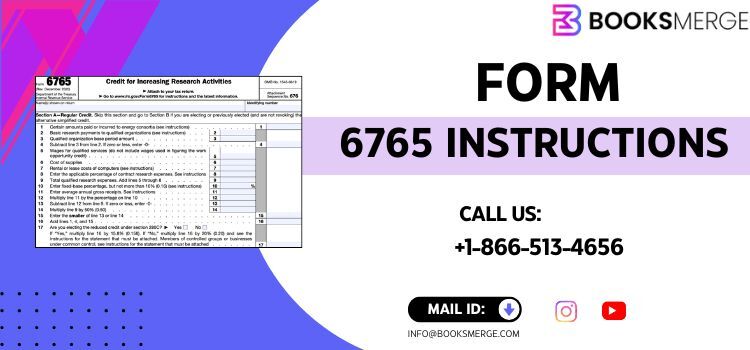
Form 6765 instructions explain how businesses claim the IRS Research and Development tax credit, calculate qualified expenses, choose the right method, and reduce income or payroll tax legally.
Table of Contents
-
Introduction to IRS Form 6765
-
What Is Form 6765 Used For?
-
Who Qualifies for the R&D Tax Credit?
-
Understanding Qualified Research Expenses (QREs)
-
Structure of IRS Form 6765 Explained
-
Regular Credit Method vs ASC Method
-
How to Calculate ASC vs Regular Method
-
Payroll Tax Offset for Startups
-
Documents Required to Support Form 6765
-
What Changed in Form 6765 Instructions 2025
-
Common Errors to Avoid
-
Why Professional Guidance Matters
-
Conclusion
-
FAQs
1. Introduction to IRS Form 6765
Innovation drives growth. The IRS understands this well. That is why it rewards businesses that invest in research and development through the R&D tax credit. IRS Form 6765 instructions guide taxpayers through the process of claiming this valuable credit correctly.
Form 6765 allows eligible businesses to reduce their tax burden while staying compliant. However, the form itself looks complex at first glance. Many businesses miss out simply because they misunderstand the instructions.
This guide breaks everything down clearly, logically, and in plain English.
2. What Is Form 6765 Used For?
Form 6765 is used to claim the federal Research and Development tax credit. Businesses file it with their annual income tax return.
The credit rewards activities such as:
-
Developing new or improved products
-
Enhancing manufacturing processes
-
Improving software performance
-
Creating new formulas or prototypes
According to the IRS, the credit exists to encourage innovation in the United States. You can verify this directly from IRS guidance on the Research Credit under Internal Revenue Code Section 41.
3. Who Qualifies for the R&D Tax Credit?
Many business owners assume only large corporations qualify. That assumption costs money.
You may qualify if your business:
-
Develops or improves products, processes, or software
-
Faces technical uncertainty
-
Uses a process of experimentation
-
Operates in the United States
Industries that often qualify include:
-
Software development
-
Manufacturing
-
Engineering
-
Biotechnology
-
Architecture
-
Construction
Small businesses, startups, and even loss-making companies may qualify. BooksMerge often helps first-time claimants uncover credits they never knew existed.
4. Understanding Qualified Research Expenses (QREs)
What are QREs?
Qualified Research Expenses form the foundation of Form 6765.
The IRS recognizes three main QRE categories:
-
Wages paid to employees performing qualified research
-
Supplies consumed during research activities
-
Contract research costs, generally 65 percent of eligible payments
These expenses must directly support qualified research activities. General overhead, marketing, and administrative costs do not qualify.
The IRS Publication 334 and Treasury Regulations under Section 41 provide authoritative definitions of QREs.
5. Structure of IRS Form 6765 Explained
Understanding the structure makes Instructions for Form 6765 much easier.
Form 6765 contains four parts:
-
Part I: Regular Credit calculation
-
Part II: Alternative Simplified Credit calculation
-
Part III: Additional forms and payroll offset election
-
Part IV: Qualified small business payroll tax election
You do not complete every section. You only fill out the parts relevant to your chosen credit method and business type.
Quick Tip: A comprehensive IRS form list helps businesses and individuals quickly identify the right tax forms for filing, reporting, and claiming credits efficiently.
6. Regular Credit Method vs ASC Method
The IRS allows two ways to calculate the credit.
Regular Credit Method
-
Based on historical gross receipts and research expenses
-
Often complex
-
Works best for businesses with long, consistent R&D histories
Alternative Simplified Credit (ASC)
-
Uses a simpler three-year lookback
-
Easier documentation
-
Commonly used by small and mid-sized businesses
Most companies choose ASC because it reduces calculation risk and audit exposure.
7. How to Calculate ASC vs Regular Method
How to calculate ASC vs regular method?
Here is the logic in simple terms.
-
ASC Method:
Credit equals 14 percent of current year QREs above 50 percent of the average QREs from the prior three years. -
Regular Method:
Credit equals 20 percent of QREs above a base amount tied to historical gross receipts.
The IRS provides formulas in the official Instructions Form 6765, which you should always reference before filing.
8. Payroll Tax Offset for Startups
Can startups use payroll offset?
Yes, and this feature changed the game for startups.
Qualified small businesses can apply up to $500,000 of the R&D credit against employer payroll taxes. This helps startups with little or no income tax liability.
To qualify:
-
Gross receipts must be under $5 million
-
No gross receipts before the prior five years
The election appears in Part IV of Form 6765 and flows through Form 8974.
9. Documents Required to Support Form 6765
What documents are required?
The IRS does not require attachments at filing, but documentation matters in audits.
Recommended records include:
-
Payroll reports tied to R&D activities
-
Project descriptions and timelines
-
Technical design documents
-
Expense ledgers
-
Contracts for third-party research
The IRS has emphasized substantiation requirements in recent guidance, so documentation quality matters more than ever.
For businesses improving financial discipline, reviewing financial literacy benchmarks can help. You may find this resource useful:
financial literacy statistics
10. What Changed in Form 6765 Instructions 2025
What changed in 2025?
The IRS introduced tighter compliance standards and expanded disclosure expectations.
Key updates include:
-
Greater focus on nexus between expenses and research activities
-
Heightened scrutiny of payroll allocations
-
Increased consistency with Section 174 capitalization rules
The IRS aims to reduce improper claims while supporting legitimate innovation. Staying current with form 6765 instructions 2025 reduces audit risk significantly.
11. Common Errors to Avoid
Even eligible businesses make mistakes.
Avoid these pitfalls:
-
Overstating employee time allocations
-
Claiming non-qualifying activities
-
Mixing operational expenses with QREs
-
Skipping payroll offset elections
-
Ignoring IRS Form 6765 instructions
One error can delay refunds or trigger audits.
12. Why Professional Guidance Matters
Form 6765 blends tax law, accounting, and technical documentation. That combination creates complexity.
BooksMerge specializes in accounting, taxation, payroll, and data migration services. The team helps businesses:
-
Identify qualifying activities
-
Calculate credits accurately
-
Prepare audit-ready documentation
-
File IRS Form 6765 correctly
For expert assistance, call +1-866-513-4656 and speak with a specialist who understands compliance and growth equally well.
13. Conclusion
The R&D tax credit rewards innovation, but only when claimed correctly. Following accurate irs form 6765 instructions ensures compliance, maximizes benefits, and reduces risk.
Businesses that invest in proper documentation, smart calculations, and professional guidance often unlock credits they never expected. Form 6765 is not just a tax form. It is a growth tool when used wisely.
14. Frequently Asked Questions (FAQs)
What is Form 6765 used for?
Form 6765 is used to claim the federal Research and Development tax credit, which reduces income or payroll taxes for businesses engaged in qualifying research activities.
Who qualifies for R&D tax credit?
Businesses that develop or improve products, processes, or software and face technical uncertainty may qualify, regardless of size or profitability.
What are QREs?
Qualified Research Expenses include wages, supplies, and certain contract research costs directly related to eligible R&D activities.
How to calculate ASC vs regular method?
ASC uses a three-year average of QREs, while the regular method relies on historical gross receipts and base calculations defined by the IRS.
What documents are required?
Payroll records, project documentation, expense reports, and technical narratives support Form 6765 claims during audits.
Can startups use payroll offset?
Yes. Qualified small businesses can offset up to $500,000 of employer payroll taxes using the R&D credit.
What changed in 2025?
The IRS increased documentation expectations and aligned Form 6765 more closely with Section 174 capitalization requirements.
Read Also: IRS form list
Leave a Reply